


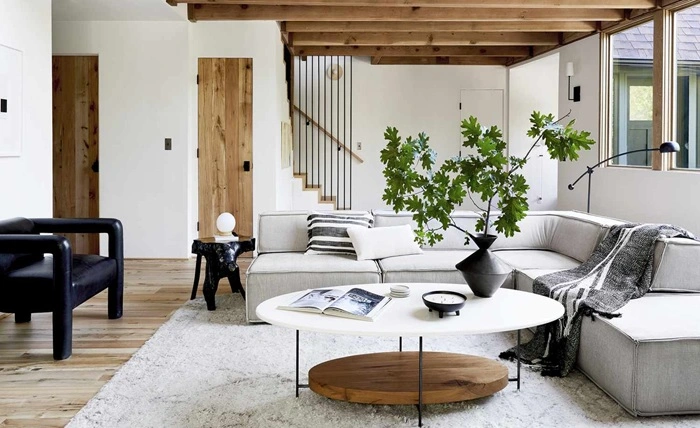
Contemporary design is often associated with clean lines and minimal spaces, but the most distinctive modern homes are rarely cold. The real magic happens when clarity is paired with warmth—when a room feels edited and calm, yet still personal and inviting. One of the simplest ways to achieve that balance is by choosing materials that bring natural character into the space, and wood is one of the strongest tools for doing exactly that.
Modern design isn’t “less”—it’s “intentional”
A contemporary interior works best when every element earns its place. Instead of filling a room with many competing details, modern design focuses on structure: proportion, negative space, and a few well-selected materials. This approach creates an atmosphere that feels refined in real life, not just in photos.
A useful mindset is to think of the room in layers:
- architecture (walls, floors, built-ins, ceiling lines)
- key furniture (the anchors that define zones)
- texture and light (what makes the space feel alive)
When these layers are balanced, the result looks effortless—because it is coherent.
Why natural wood makes contemporary spaces feel human
Wood brings something that sleek finishes alone can’t: softness, movement, and subtle variation. Even in very minimalist interiors, a single wood element can shift the whole mood from “gallery-like” to “lived-in but elevated.”
Birch is especially interesting in modern spaces because it tends to read light, clean, and calm. Its tone works beautifully with contemporary palettes—creamy whites, warm greys, soft blacks, and muted earth tones—while still adding a natural touch. A well-designed birch coffee table can introduce warmth without taking over the room, which is exactly what modern design often needs.
The coffee table as a design anchor
In living rooms, the coffee table is more important than many people realize. It sits at the center of the space—both physically and visually—and quietly connects the sofa, chairs, rug, and lighting into one composition. A good table doesn’t just “match” the room; it organizes it.
When choosing a coffee table, designers often look for a few key qualities:
1) Proportion and clearance
A table should feel comfortably reachable from seating, with enough space to move around it. It’s not only about size—it’s about how the room flows.
2) Shape that supports the layout
Rectangular forms tend to emphasize structure and symmetry, while rounded edges soften modern rooms and improve circulation—especially in smaller spaces.
3) Material harmony
The table doesn’t have to match everything, but it should belong with the room’s key materials. Birch works well when you want the space to feel lighter and more open.
Texture and contrast create the “distinctive” feeling
Many contemporary interiors rely on a restrained color palette, so contrast becomes the main source of interest. That contrast can be visual (light vs. dark), tactile (smooth vs. textured), or even architectural (flat planes vs. curved forms).
A light wood piece like birch looks especially striking when paired with:
- matte black or graphite details
- stone, plaster, or microcement textures
- soft textiles such as linen, wool, or bouclé
- glass accents that keep the room airy
This kind of combination feels modern, but also timeless—because it’s rooted in material quality rather than trend.
Lighting completes the atmosphere
The best modern spaces don’t rely on one bright overhead light. They use layered lighting to create mood: warm ambient light, focused task light, and subtle accents that highlight texture. A well-lit living room makes wood look richer, surfaces look deeper, and the whole interior feel calmer.
If you want a contemporary space that feels exclusive, aim for soft, dimmable lighting and thoughtful placement. It’s the difference between a room that looks good and a room that feels good.
A modern home should feel like you
Distinctive design isn’t about copying a showroom. It’s about creating a space that supports your habits and reflects your taste—while staying visually calm and well-made. With the right materials, strong proportions, and a few anchor pieces, modern interiors become more than stylish: they become personal.
Wood elements—especially light, refined options like birch—are one of the easiest ways to bring warmth into contemporary design without losing clarity. When chosen well, they make modern spaces feel complete.